Questions? Call (855) 927-4367 | Mon ‑ Fri 8am ‑ 6pm MT
Managed whole-home backup uses load controls to help a properly sized standby generator serve more household needs without overloading. This video highlights automatic transfer, app monitoring, quiet operation, warranty coverage, and the importance of comparing generator and battery options.
Large appliances can draw substantial power, especially when motors start. Load management sequences or temporarily pauses selected equipment so the generator can prioritize the home safely.
A professional sizing review should identify essential circuits, large loads, fuel supply, climate needs, desired runtime, and maintenance. Homeowners should also compare a generator with battery storage because the two technologies have different strengths.
Programs, utility policies, equipment availability, and incentives can change. Confirm current terms for your address and consult qualified financial or tax professionals when appropriate.
Narrator: When the power goes out, what are you really losing? Time, food, peace of mind. Meet the new era of home protection. A managed whole home generator that's smarter than you think.
No more compromises. We're talking a Cummins home generator at work for you. Here's what makes it different. First, it's not a whole house in name only.
The system manages your heavier loads intelligently. It staggers or schedules appliances so your generator never overloads. This is what managed whole home means. Cummins brings serious hardware, a 10-year warranty, an automatic transfer switch that flips over automatically, and ultra quiet operation at only 65 dB.
You can also monitor everything. Check status, get alerts, all from an app on your phone. Your whole home deserves backup power that adapts to your lifestyle, not forces you to dial back. Want to see which backup solution fits your home?
Let us run a free sizing and comparison Cummins versus Generac or any other solution and show you exactly what managed whole-home backup means for your property.

Electricity bills can rise even when a household's usage barely changes. This video explains how growing grid demand and infrastructure investment can contribute to higher utility rates—and how home solar may reduce exposure to those increases.

The familiar homeowner tax credit changed, but this video explains a Big Dog Solar program intended to deliver comparable upfront value through a business-side structure. Mitch outlines the lease-and-buyout concept and why customers must verify current terms and availability.
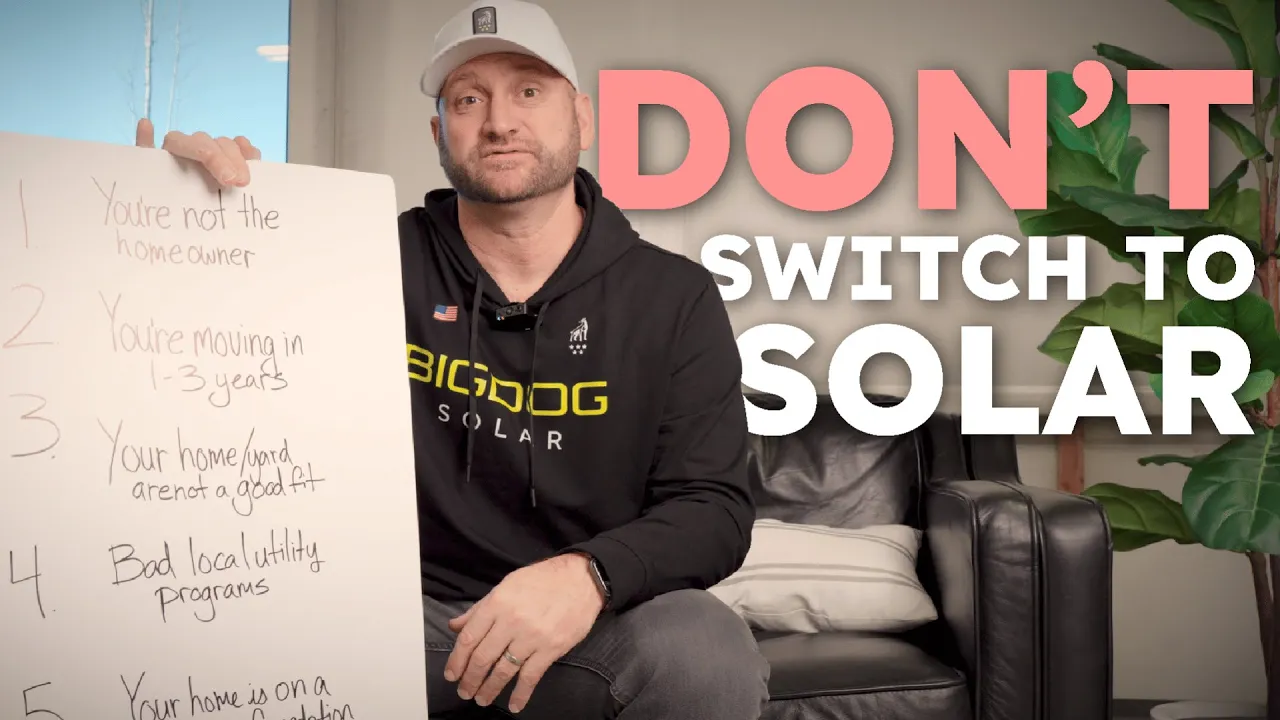
Many homeowners jump into solar without fully understanding the potential pitfalls. In this video, we break down five critical reasons why installing solar panels might not be the smart financial move you think it is.